

What Overtourism Actually Means
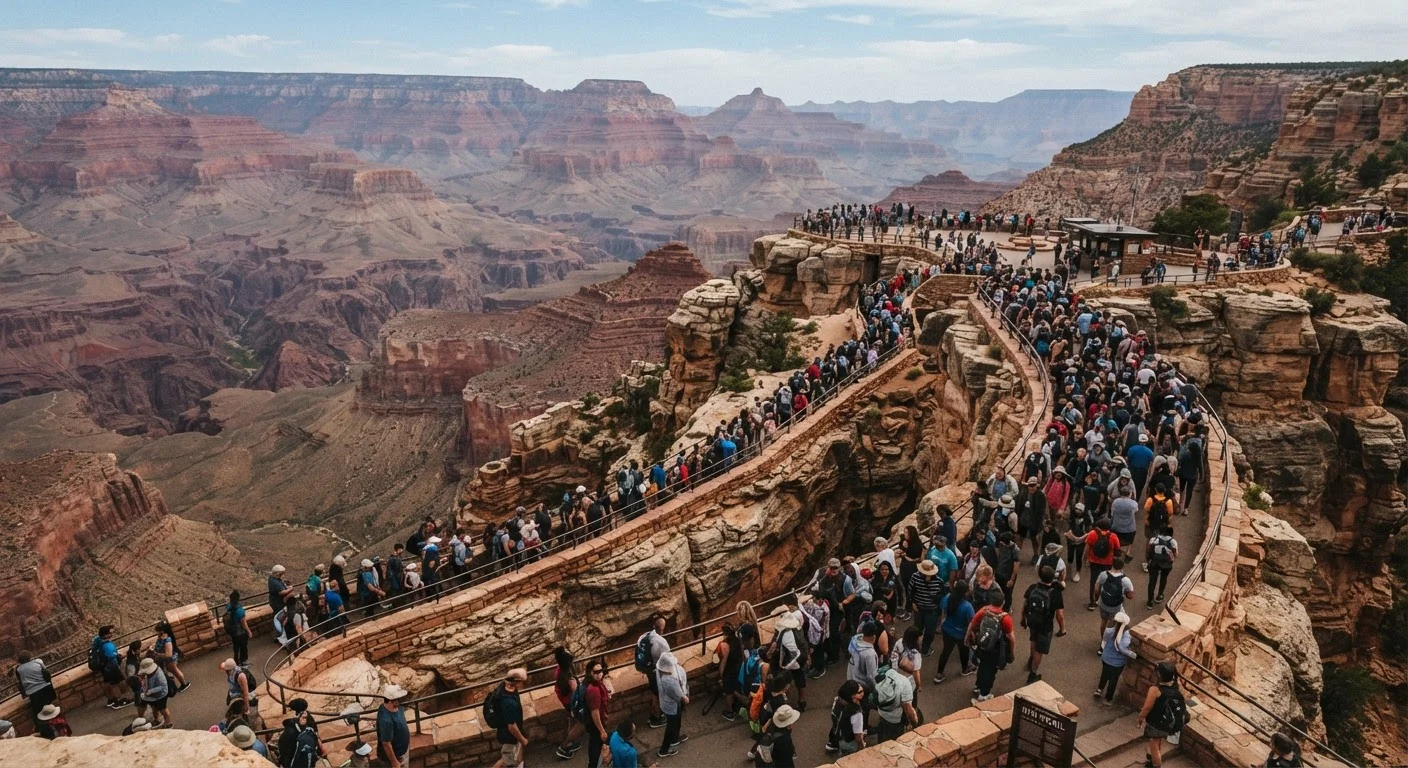
The word gets used loosely - sometimes applied to any crowded beach or a theme park on a holiday weekend. But overtourism, as researchers and urban planners use the term, is more specific. It describes a condition where visitor demand consistently exceeds a destination's capacity to absorb it without lasting harm.
That harm takes several forms. Environmental degradation is the most visible: eroded trails, polluted waterways, and wildlife driven out of habitat by foot traffic and noise. Infrastructure strain is less dramatic but equally real - sewer systems, parking, roads, and emergency services all have limits that weren't designed for peak tourist loads. Social impact is harder to photograph but deeply felt by residents: rising rents driven by short-term rental conversions, loss of local businesses replaced by souvenir shops, and a general erosion of neighborhood identity.
Importantly, overtourism is not synonymous with popularity. A well-managed destination can welcome millions of visitors without crossing into harmful territory. The difference lies in planning, infrastructure investment, and whether locals retain meaningful control over how tourism develops in their community.
Overtourism Is Not Just a Foreign Problem
Media coverage of overtourism often focuses on European cities like Venice or Barcelona, which have implemented tourist taxes and entry restrictions. But many American destinations face comparable pressures - with less regulatory flexibility and fewer tools to respond. US federal land management agencies, state parks, and municipalities are increasingly grappling with the same questions about carrying capacity and community impact.
US Destinations Showing Real Strain
Several American destinations have moved from popular to genuinely stressed in recent years - a shift accelerated by pandemic-era travel rebounds and the rise of social media-driven destination discovery.
Arches National Park, Utah - With a single road in and out and fragile sandstone formations, Arches has implemented timed-entry reservations during peak season. Wait times for entry used to extend for hours. The Moab region broadly faces similar pressures, with the surrounding town struggling to provide affordable housing for workers who service the tourism economy.
Great Smoky Mountains National Park, Tennessee/North Carolina - The most-visited national park in the country, it sees over 12 million visitors annually with no entrance fee and no reservation requirement. Gateway towns like Gatlinburg experience severe traffic congestion during peak weekends that locals describe as effectively making the area inaccessible for daily life.
Sedona, Arizona - Known for its red rock scenery and wellness tourism, Sedona has faced documented trail erosion and parking overflow that spills onto residential streets. The city has explored shuttle systems and trail permits in response.
Hawaii's most-visited shores - Certain beaches on Maui and O'ahu have experienced coral damage from sunscreen and foot traffic, while housing costs have pushed long-term residents off islands. State and county governments have debated tourist taxes and visitor caps, though policies continue to evolve.
For travelers interested in national parks that require more planning but reward the effort, see our look at parks that reward the extra planning effort.
12M+
Annual visitors to Great Smoky Mountains National Park
According to the National Park Service, Great Smoky Mountains consistently receives the highest visitation of any unit in the national park system - roughly double the next most-visited park.
1 road in
Arches National Park access points
Arches has a single entry road, making it uniquely vulnerable to traffic bottlenecks; the park introduced a timed-entry reservation system to address hours-long entry waits during peak season.
~80%
Visitors arriving during peak months at many parks
National Park Service visitation data consistently shows that the majority of annual visitors at popular parks arrive within a narrow summer window, concentrating environmental and social strain.
What Drives a Destination Toward Its Breaking Point
Several forces combine to push destinations past their sustainable threshold. Social media visibility is a significant accelerant - a single viral post can redirect hundreds of thousands of visitors toward a location that had no infrastructure built to receive them. This phenomenon, sometimes called the "Instagram effect," has affected slot canyons, obscure overlooks, and small coastal towns that previously attracted only regional visitors.
Short-term rental platforms have changed the housing equation in tourist-heavy communities. When residential units convert to vacation rentals at scale, workforce housing disappears - a pattern documented in places from the Florida Keys to coastal Maine. The result is a tourism economy that struggles to staff itself because workers can't afford to live nearby. This dynamic has some overlap with broader remote work migration patterns; our coverage of how remote work reshaped where Americans want to live explores the housing side in detail.
Seasonal concentration compounds all of these pressures. When 80% of annual visitors arrive in three months, infrastructure must be sized for the peak - or fail during it. Understanding how peak, shoulder, and off-season travel differ is one of the most practical tools travelers have for reducing their own contribution to crowding.
How Travelers Can Make Thoughtful Choices
Awareness of overtourism doesn't mean avoiding popular places entirely. It means making more deliberate decisions about when, where, and how you visit.
Timing matters enormously. Visiting during shoulder seasons - the weeks just before or after peak - can dramatically reduce crowding while still offering good conditions at many destinations. Seasonal travel planning is worth studying before you book.
Choosing itinerary flexibility also helps. Rigid schedules that lock in the most famous sites on the busiest days concentrate visitors exactly where pressure is already highest. A flexible itinerary creates room to pivot toward less-crowded alternatives when conditions call for it.
Spending locally - eating at resident-owned restaurants, using local guides, staying in locally operated lodging - ensures that tourism revenue circulates within the community rather than flowing to outside operators. This won't solve structural problems, but it does shift some of the economic equation toward the people who bear overtourism's costs.
Finally, following posted rules and Leave No Trace principles isn't just etiquette - it's functional. Trail closures, permit systems, and reservation requirements exist because voluntary compliance failed. Respecting them is the baseline contribution any visitor can make.
Check Official Sources Before You Finalize Plans
Reservation systems, permit requirements, and entry restrictions at popular US parks and destinations change frequently. Always verify current requirements directly with the managing agency - typically the National Park Service, a state parks department, or a local authority - before booking transportation or lodging. Conditions, access rules, and seasonal closures are not always reflected accurately on third-party travel sites.
Frequently Asked Questions
A busy destination has high visitor numbers that its infrastructure can absorb. An overtouristed destination has visitor volumes that actively degrade the experience, harm the environment, or displace locals. The distinction is about impact, not headcount.
Zion, Arches, Great Smoky Mountains, and Yosemite consistently rank among the most strained parks. Arches implemented a timed-entry reservation system to manage peak-season crowding. Conditions vary significantly by season, so always check the park's official website before visiting.
Visit during shoulder seasons, choose lesser-known alternatives to famous sites, follow Leave No Trace principles, and spend money locally rather than with large outside operators. <a href="/travel/trip-planning/the-case-for-slow-travel-trading-highlights-for-depth">Slow travel</a> - spending more time in fewer places - also reduces concentrated pressure on hotspots.
Yes. Cities like New Orleans, Savannah, and parts of Hawaii face housing shortages partly linked to short-term rental proliferation driven by tourism demand. Neighborhood character and affordability for longtime residents are both documented concerns in these markets.
Permit systems can cap daily visitors and protect sensitive environments, but they also shift access dynamics - favoring those with flexible schedules and internet access. They're considered a partial solution, most effective when combined with investment in trail infrastructure and visitor education.
The content on this site is for informational purposes only and is not a substitute for professional advice. Always consult a qualified professional for guidance specific to your situation.