

Our Verdict
No single payment method works perfectly in every situation abroad. A well-prepared traveler carries a no-foreign-transaction-fee card as the primary tool, a small reserve of local cash for emergencies and cash-only vendors, and a clear plan for sourcing that cash at a local ATM rather than an airport kiosk. Understanding where fees hide - and how to sidestep them - keeps more of your budget where it belongs.
| Best for | Recommended |
|---|---|
| Most everyday purchases in cities and tourist areas | No-fee credit or debit card |
| Markets, tipping, rural areas, and small vendors | Local cash |
| Getting local currency at a fair rate | In-country ATM withdrawal |
| Last-resort currency in a pinch | US dollars (widely accepted in some regions) |
Why Your Payment Strategy Matters Before You Land
Most travelers don't think about their payment setup until they're standing at baggage claim, jet-lagged, staring at a currency exchange booth. By then, the costly decisions have already started. A few hours of planning before departure - choosing the right card, notifying your bank, and knowing how to find a local ATM - can prevent unnecessary fees and the stress of being caught short.
This guide walks through the three main options - cards, cash, and currency exchange services - and helps you understand when each one makes sense. For a broader pre-departure checklist, see Planning Your First International Trip: A Ground-Up Guide.
| No-Fee Card | Standard Card | In-Country ATM | Airport Exchange | Cash (pre-exchanged) | |
|---|---|---|---|---|---|
| Exchange rate quality | Near mid-market | Near mid-market | Near mid-market | Poor | Varies |
| Foreign transaction fee | None | 1-3% per transaction | Withdrawal fee may apply | High markup built in | None once held |
| Convenience | High | High | Moderate | High | Moderate |
| Works without network/power | No | No | No | Yes | Yes |
| Risk if lost or stolen | Cancellable | Cancellable | Cancellable | Gone | Gone |
| Best for | Most purchases | Backup only | Sourcing cash | Last resort only | Small vendors, tips |
Using Cards Abroad: What to Watch For
Cards are the most convenient way to pay internationally, but not all cards are equal. Many standard credit and debit cards charge a foreign transaction fee - typically 1-3% on every purchase made in a foreign currency. Over a two-week trip, those charges add up noticeably.
Cards specifically designed for travelers waive this fee entirely. Beyond fees, two other issues commonly catch travelers off guard:
- Dynamic Currency Conversion (DCC): When a card terminal offers to charge you in US dollars instead of local currency, it's applying its own exchange rate - almost always worse than your bank's rate. Always choose to pay in the local currency.
- Card blocks: Banks sometimes flag international charges as suspicious and freeze the card. Calling your bank or setting a travel notice through your bank's app before departure is a simple fix that many travelers skip.
ATM withdrawals abroad using a debit card linked to a checking account can also be a sound strategy, particularly if your bank reimburses foreign ATM fees. Use ATMs affiliated with major banks rather than standalone kiosks in tourist areas, which often carry high surcharges.
Set Up Your Cards Before You Leave Home
Log into your bank's app or call the number on the back of your card to set a travel notice with your destination countries and dates. This takes less than five minutes and significantly reduces the chance of a legitimate purchase being flagged as fraud. While you're at it, save international customer service numbers for each card - the toll-free US numbers typically don't work from abroad.
Cash: When It's Not Optional
Cashless travel sounds appealing, but it's not realistic in many parts of the world. Rural areas, local transit, small restaurants, markets, and tipping situations regularly require physical currency. Arriving in a new country with zero local cash - even a modest amount - leaves you vulnerable if your card has an issue or a vendor doesn't accept cards.
A practical approach: arrive with the equivalent of roughly $50-$100 USD in local currency for immediate needs (transport, a meal, small tips). Source it from an in-country ATM after landing rather than before departure, where options are usually limited and rates are poor.
Keeping cash in multiple places - a small amount accessible, a larger reserve secured separately - is a basic safety habit. Staying Safe Abroad Without Living in Fear covers practical approaches to carrying money discreetly.
Currency Exchange: Where Rates Go Wrong
Not all exchange services are created equal, and the difference in rates can be significant. Here's how the main options typically compare:
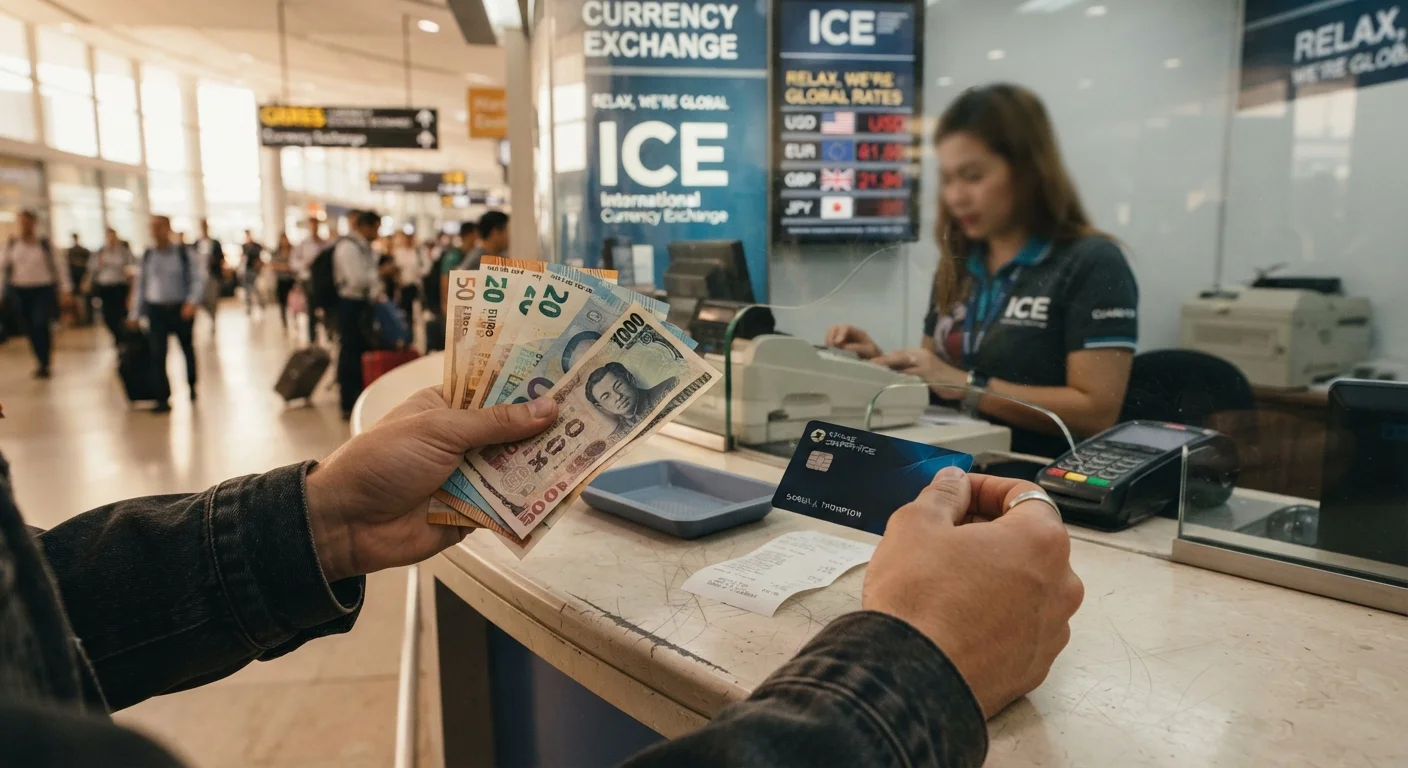
- Airport exchange booths: Convenient but consistently among the worst rates available. Use them only for a small emergency amount if needed at arrival.
- Hotel front desks: Similar to airport booths - easy, but costly.
- In-country bank ATMs: Generally offer exchange rates close to the interbank (mid-market) rate, minus your bank's withdrawal fee. This is usually the most practical option for most travelers.
- Dedicated currency exchange offices (in destination): Quality varies. In many cities, reputable exchange offices post their rates publicly and can be competitive - avoid any that advertise "zero commission" without clearly displaying the rate, as the markup is often built into an unfavorable rate.
Before leaving home, check the mid-market exchange rate for your destination currency using a publicly available financial data source. This gives you a baseline to recognize a poor rate when you see one. Managing your overall travel finances connects naturally to broader budgeting habits - the Budgeting Basics hub has practical frameworks for tracking spending.
Building a Simple Payment Plan for Your Trip
The goal isn't to optimize every transaction - it's to avoid the most common, preventable losses. A workable approach for most international travelers:
- Identify and bring at least one card with no foreign transaction fees. Carry a backup card from a different network in case one is declined.
- Notify both card issuers of your travel dates and destinations.
- Plan to withdraw local currency from an in-country ATM within the first hour of arrival. Have a small backup in US dollars for countries where USD is widely accepted as a fallback.
- Decline dynamic currency conversion whenever it appears on a card terminal.
- Keep a written record of emergency numbers for each card issuer - not just on your phone - in case a card is lost or stolen.
If your trip spans multiple destinations, logistics get more complex. Staying Organized Across a Multi-City Trip addresses how to manage finances and logistics when you're moving between countries with different currencies.
This article is for general informational purposes only and does not constitute financial advice. Exchange rates and fee structures vary by institution and change over time - verify current terms with your card issuer before traveling.
The content on this site is for informational purposes only and is not a substitute for professional advice. Always consult a qualified professional for guidance specific to your situation.