

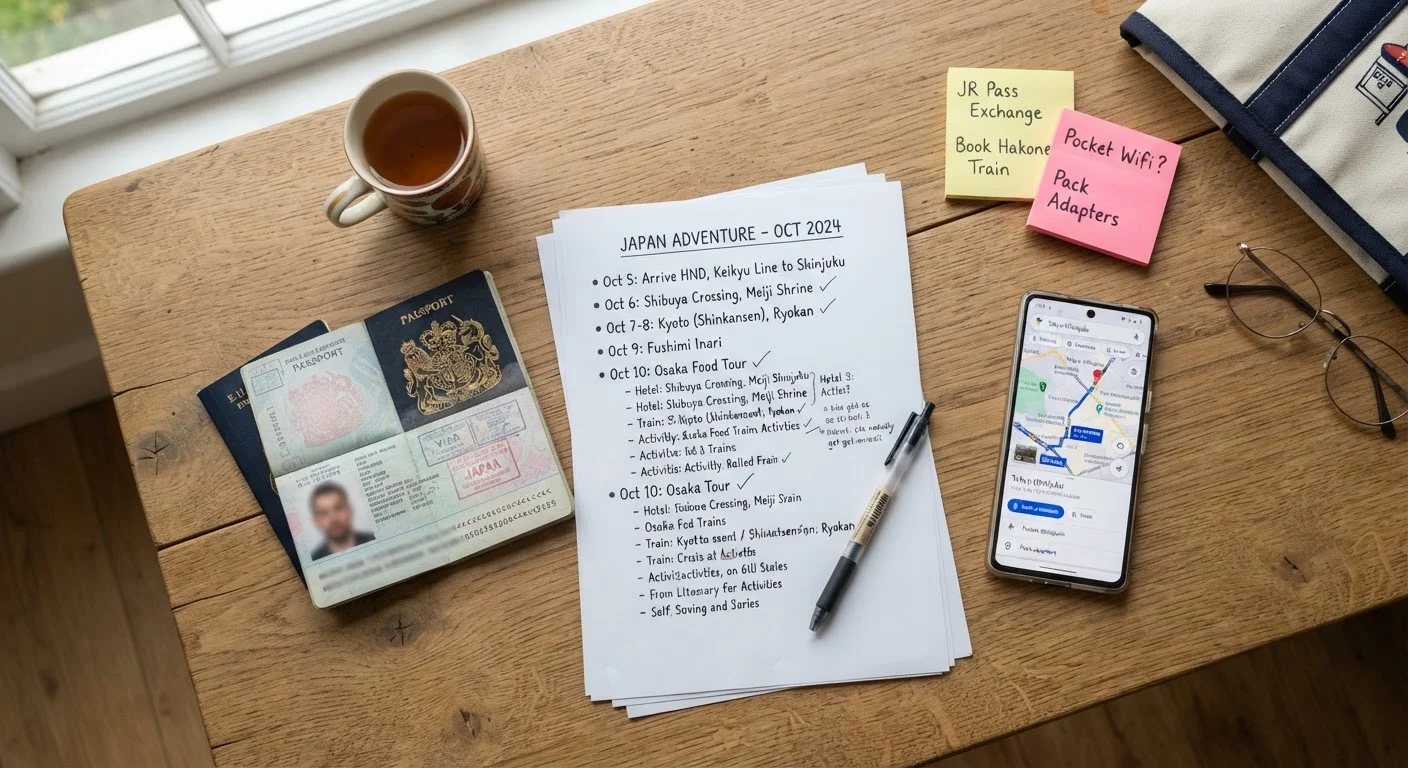
Why Multi-City Trips Demand a Different Planning Mindset
A single-destination trip is forgiving. If you forget a confirmation number or misread a check-in time, the consequences are usually minor. Multiply your stops by three or four cities, and every loose thread becomes a potential disruption - a missed train, a locked-out hotel room, or a day lost to scrambling for information you assumed you had.
Multi-city trips introduce compounding logistics: layered transport connections, varying accommodation check-in windows, and potentially different currencies or languages at each stop. The organizational habits that work for a weekend getaway often aren't enough. What follows are proven practices for keeping everything coherent across a complex itinerary. For foundational itinerary-building advice, see Building a Trip Itinerary That Actually Works.
Core Practices for Staying Organized on the Road
The following practices address the most common failure points travelers encounter when managing multiple destinations. Each is actionable before and during your trip.
- Build deliberate buffer time between city transitions. Tightly scheduled connections - a flight that lands at noon and a train that departs at 1 p.m. - leave no margin for delays. Adding at least two to three hours between legs absorbs the most common disruptions without derailing the rest of your trip. For a detailed look at connection timing, Airport Layover: Short Connection vs. Long Wait breaks down the real trade-offs.
- Store offline backups of all documents. Screenshots, PDFs, and downloaded confirmation emails should live on your device, not just in an internet-dependent app. Connectivity gaps happen in transit hubs and rural areas alike.
- Track payment methods per city. Some destinations are predominantly cash-based; others are nearly cashless. Knowing this in advance prevents scrambles at arrival. Managing Money Across Borders covers this in practical detail.
- Assign one digital folder per city. Photos, booking screenshots, maps, and local transport notes organized by destination reduce the mental load of searching across a chaotic camera roll or email inbox mid-trip.
Build a Transition Checklist for Every City Change
Each time you move from one city to the next, the same set of tasks applies: confirm onward transport, settle any outstanding accommodation payments, check luggage, and locate your next hotel's address offline. Standardizing this routine prevents the kind of rushed, error-prone departures that derail itineraries.
Managing the Transition Between Cities
The highest-risk moments in a multi-city trip are the transitions - not the time spent in each destination. Departure mornings concentrate several tasks: checking out, moving luggage, confirming onward bookings, and navigating unfamiliar transport networks, often under time pressure.
Verify Entry Requirements Per Destination
On international multi-city trips, different countries may have distinct visa, vaccination, or entry requirements - even within the same region. Always check official government and embassy sources before traveling, as rules can change. Do not rely on third-party summaries as the final word.
A structured pre-departure routine makes these moments manageable. The evening before each transition, review your next city's accommodation address and check-in instructions, confirm that transport bookings are active, and verify what local time your arrival will be - particularly relevant if you're crossing time zones. Time Zone by Time Zone is a useful reference for this.
Habits That Separate Seasoned Travelers From Stressed Ones offers additional perspective on the low-effort routines that experienced travelers use to reduce friction at exactly these moments.
Quick Actions to Implement Before You Leave
These immediate steps require minimal time but significantly reduce the risk of logistics problems once you're on the road.
For a broader view of the full planning process - from initial booking decisions to final preparations - The Complete Trip Planning Playbook provides an end-to-end reference. And if you're weighing how much flexibility to build into your structure, How Flexible Itineraries Differ From Rigid Travel Schedules addresses that trade-off directly.
“The traveler who writes things down rarely loses them. The one who relies on memory usually does - at the worst possible moment.”
— Travel Editorial Team, Experienced multi-city travel researchers and writers
The content on this site is for informational purposes only and is not a substitute for professional advice. Always consult a qualified professional for guidance specific to your situation.