

Our Verdict
One-bag travel delivers real, tangible benefits - faster airports, zero baggage fees, and a lighter mental load - but only when the trip genuinely fits within its constraints. For travelers who take frequent shorter trips, move between cities, or prioritize mobility, it can transform the experience. For those packing for extreme climates, traveling with young children, or staying put for weeks, the trade-offs outweigh the gains.
Best suited to solo travelers, frequent short-to-medium trip takers, and anyone who values speed and flexibility over a full wardrobe.
What One-Bag Travel Actually Means
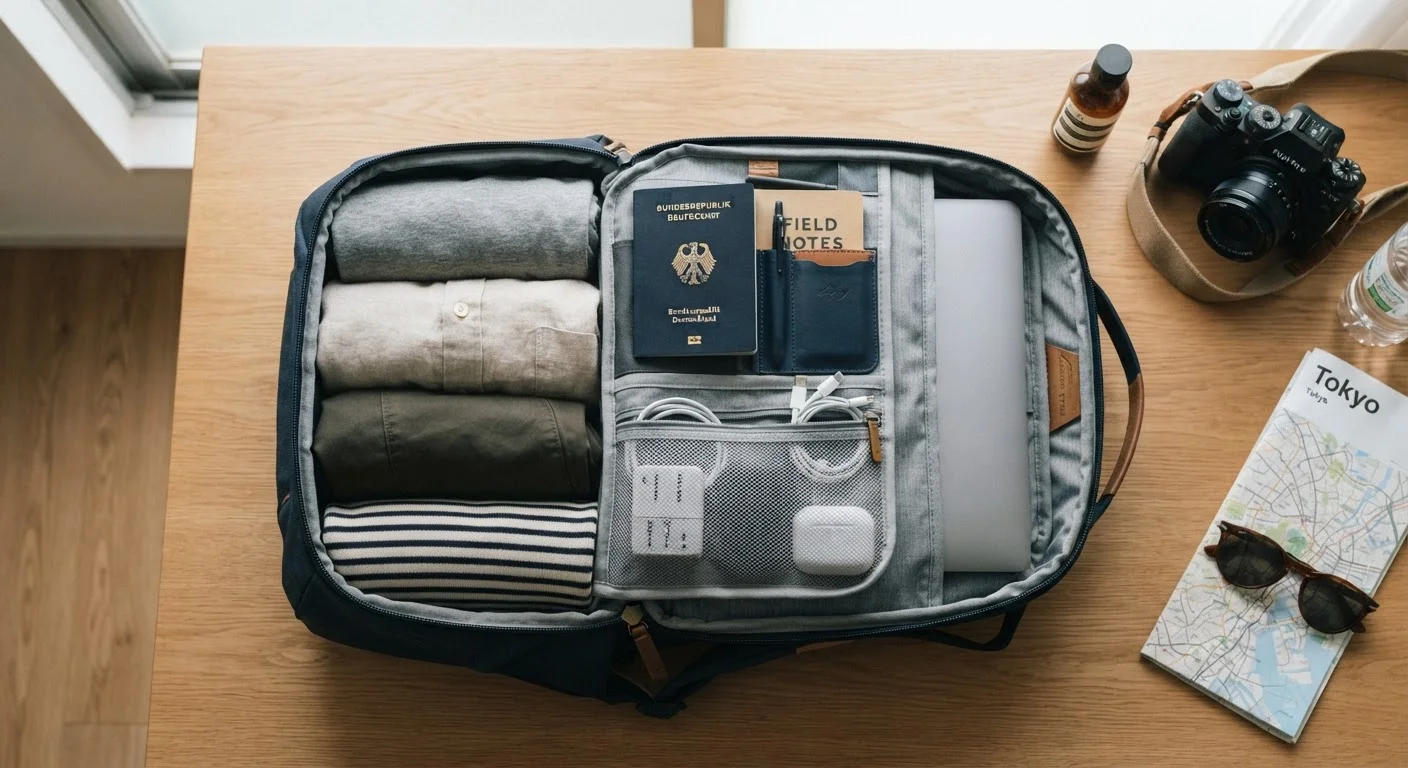
One-bag travel means carrying everything you need for a trip in a single carry-on sized bag - no checked luggage, no personal item overflow, no exceptions. The bag typically fits in an overhead bin or under the seat in front of you. It's a discipline as much as a packing method.
The approach has grown steadily in popularity, particularly among frequent flyers and urban travelers who prioritize speed and flexibility. But it's often framed as a lifestyle upgrade without an honest accounting of where it falls short. The real picture is more nuanced - and knowing it beforehand saves frustration later. If you're exploring independent travel styles more broadly, our look at solo travel vs. group tours also covers how mobility choices shape your overall experience.
The Real Advantages
The benefits of one-bag travel are concrete, not aspirational.
No checked baggage fees on any flight
Most airlines charge $30-$60 or more per checked bag each way. Frequent travelers can eliminate hundreds of dollars in annual fees by staying carry-on only.
Eliminates risk of lost or delayed luggage
When your bag is always with you, airlines can't misroute it. Lost luggage affects millions of travelers annually and can derail itineraries significantly.
Faster airport experience from check-in to exit
Skipping baggage drop and the arrivals carousel can save 30-60 minutes per trip leg - time that adds up across multi-stop itineraries.
Greater mobility between destinations
A single carry-on is far easier to manage on trains, buses, cobblestone streets, and hostels with no elevator. You move faster with less physical strain.
Simpler logistics and fewer decisions en route
Traveling with less reduces the mental overhead of managing, securing, and keeping track of belongings throughout a trip.
Moving through airports faster is perhaps the most underrated gain. Skipping baggage drop, bypassing the carousel, and walking straight to your rideshare or transit line saves meaningful time - sometimes 45 minutes or more per trip leg. On multi-city itineraries, that compounds quickly.
There's also a focus benefit that experienced minimalist travelers consistently report: when you own less on a trip, decisions simplify. You stop managing stuff and start moving. That reduced cognitive overhead aligns with habits seasoned travelers rely on to reduce friction across every stage of a journey.
The Real Disadvantages
One-bag travel has genuine limitations that are frequently glossed over in enthusiastic packing guides.
Strict volume limits create real packing pressure
A standard carry-on offers 35-45 liters of space. Fitting clothing, toiletries, tech, and gear for longer or multi-climate trips requires difficult trade-offs.
Airline rules vary and can catch you off guard
Carry-on size and weight limits differ by airline and route. Budget carriers in particular often enforce stricter rules that a bag that fits on one airline may violate on another.
Not practical for all trip types or travelers
Families with young children, travelers attending formal events, or those heading to cold-weather destinations will likely find the constraints unworkable without significant compromise.
Requires mid-trip laundry planning
Trips over 7-10 days generally require doing laundry at least once, which demands flexibility in scheduling and comfort with hand-washing or using laundromats.
Specialty gear rarely fits within limits
Hiking boots, camera equipment, musical instruments, sports gear, and medical devices often can't be packed into a standard carry-on without exceeding size or weight limits.
Volume constraints become a real problem the moment a trip spans multiple climates, requires formal attire, or extends past about two weeks. Re-wearing clothes and doing laundry mid-trip is a workable strategy for some travelers - and a dealbreaker for others. If the idea of slow travel appeals to you, it's worth reading our piece on slow travel trade-offs, since longer stays in fewer places can actually make one-bag living more manageable.
Carry-On Rules Are Not Universal
Carry-on size and weight allowances vary significantly between airlines, fare classes, and even routes. A bag that passes without issue on a domestic U.S. flight may be flagged or gate-checked on a budget international carrier. Always check the specific airline's current policy before you travel, and verify whether your fare class includes a carry-on allowance at all - some basic economy fares do not.
Before You Commit: What to Realistically Assess
One-bag travel works best when your trip type, destinations, and personal priorities align with its constraints. Ask yourself the following before committing:
- How many nights are you packing for? Trips under 10 days are generally manageable. Longer trips demand a realistic laundry plan.
- How many climate zones will you cross? Layering systems help, but bulky cold-weather gear rarely fits without compromise.
- What are your airline's carry-on rules? Size and weight limits vary by carrier and route - especially on budget airlines and international legs. Always verify directly with the airline before you fly.
- Are you traveling with others? Coordinating a one-bag approach across a family or group adds complexity.
If you're new to the concept and want to build a practical system from scratch, our carry-on packing guide walks through exactly what to include, what to cut, and how to stay within limits without over-thinking it.
~26M
Bags mishandled by airlines globally per year
According to SITA's annual Baggage IT Insights report, tens of millions of bags are delayed, damaged, or lost globally each year - a core risk one-bag travelers avoid entirely.
$60+
Typical one-way checked bag fee on major U.S. carriers
Many major U.S. airlines charge $35-$65 for a first checked bag each way, with fees for additional bags rising significantly beyond that.
The content on this site is for informational purposes only and is not a substitute for professional advice. Always consult a qualified professional for guidance specific to your situation.