

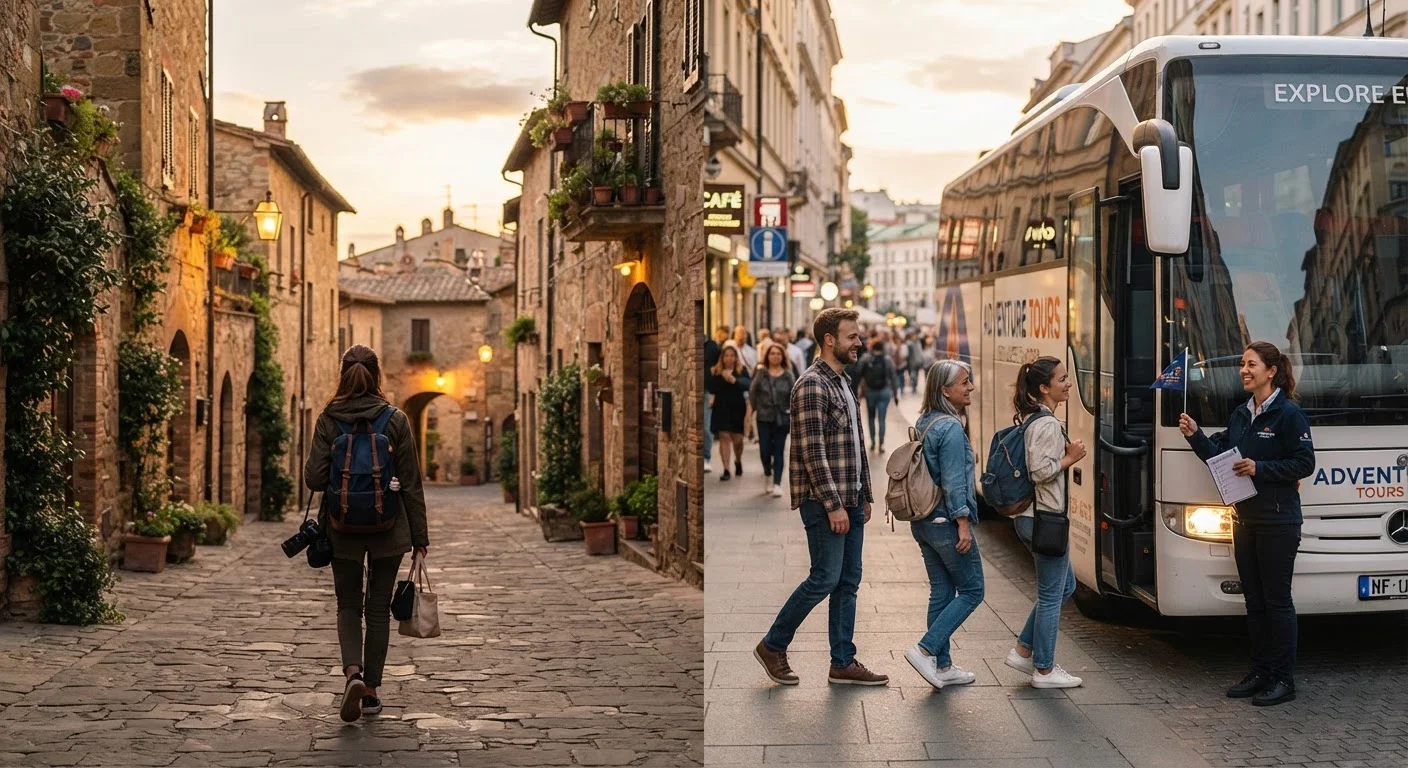
Option A
Solo Travel
The fully self-directed, flexible approach to exploring on your terms.
Best for: Independent travelers who want complete control over pace, destinations, and daily decisions.
Option B
Group Tours
The structured, socially connected way to travel with built-in logistics.
Best for: Travelers who prefer pre-arranged itineraries, built-in companionship, and reduced planning burden.
What You're Actually Choosing Between
When travelers debate solo travel versus group tours, they're really weighing two different relationships with control. Solo travel means you design and execute every element - accommodation, transport, pacing, meals. A group tour means an operator has pre-determined most of those elements, and your job is to show up. Neither is a shortcut to a better trip; they're genuinely different experiences suited to different travelers and contexts.
It's also worth noting that these categories aren't rigid. Some group tours are small and highly flexible. Some solo trips involve booking guided day excursions. Understanding what each approach actually delivers - and where it falls short - helps you make a decision rooted in your specific trip goals rather than general assumptions. For a deeper look at how scheduling flexibility affects your trip overall, see how flexible itineraries differ from rigid travel schedules.
| Criterion | Solo Travel | Group Tours |
|---|---|---|
| Schedule flexibility | Fully self-determined | Fixed, operator-set itinerary |
| Planning responsibility | Entirely on the traveler | Handled by the operator |
| Social experience | Self-created, variable | Built-in group dynamic |
| Cost structure | Variable; single supplements apply | Bundled; group rates may apply |
| Local access and expertise | Dependent on self-research | Local guides typically included |
| Problem-solving when disruptions occur | Solo responsibility | Operator manages most issues |
| Depth vs. breadth of experience | Easier to go deep in fewer places | Tends toward broader coverage |
The Real Trade-Offs of Going Solo
Solo travel's primary advantage is autonomy. You move when you want, change course without consensus, and build an itinerary around your genuine interests rather than a group average. This also tends to produce more authentic local interactions - when you're not insulated by a tour group, you're more likely to navigate a neighborhood market, strike up a conversation at a café, or stumble onto something unplanned.
The genuine downsides are less often discussed. Solo travelers absorb 100% of the planning workload: researching transport options, managing bookings, troubleshooting when things go wrong, and staying aware of local safety conditions. Costs don't always favor solo travelers either - single-room supplements, private transport, and the absence of group discounts can make independent travel more expensive in certain destinations. Building a trip itinerary that actually works becomes an essential skill rather than an optional one. For solo travel in unfamiliar urban environments, visiting a new city solo offers practical orientation strategies.
~50%
U.S. adults who have traveled solo at least once
AARP travel research has consistently found that solo travel is common across a wide range of age groups, not limited to younger travelers.
1 in 4
Solo travelers citing safety as a primary concern
Surveys by travel industry groups suggest safety considerations remain a top factor shaping decisions about independent versus guided travel.
What Group Tours Actually Deliver
The core value of an organized group tour isn't just convenience - it's the reduction of cognitive load. A reputable tour operator handles transport connections, accommodation quality checks, entrance permits, and local guide expertise. For destinations with complex entry logistics, restricted access sites, or language barriers, this infrastructure has real practical value that's easy to underestimate until you're managing it alone.
Group tours also provide built-in social structure. Traveling with others - even strangers - changes the experience in ways some travelers value highly and others find constraining. The key limitation is pace: most tours move on a fixed schedule optimized for the group average, which means you'll spend time at sites you find less interesting and leave places you'd happily stay longer. If the structure of a group trip appeals to you but you're weighing how much time to spend in each location, the case for slow travel is worth reading before you commit. Before booking any multi-destination trip, it's also worth reviewing travel insurance coverage basics, as group and solo travel carry different risk profiles.
Group Tour Sizes Vary Significantly
Not all group tours involve large buses and dozens of travelers. Small-group tours - typically capped at 12 to 16 participants - offer a meaningfully different experience with more flexibility, closer guide interaction, and access to smaller venues. If the crowd dynamic is your primary concern with group travel, it's worth specifically researching small-group operators rather than ruling out the format entirely.
Making the Decision for Your Next Trip
The most useful question isn't which approach is objectively better - it's which one matches the specific trip you're planning. Consider the destination first: some regions are genuinely easier and more rewarding to navigate independently, while others benefit significantly from local operator expertise and access. Consider your travel objectives next: if immersive cultural engagement is the goal, solo travel typically creates more opportunities for it. If seeing a wide range of sites efficiently is the priority, a well-designed tour may deliver more in the same time window.
Experience level matters too, particularly for first-time international travelers or those visiting significantly unfamiliar regions. A group tour can serve as a low-friction introduction to a destination, after which future visits solo become far more approachable. For practical help managing the logistics of either approach across a complex itinerary, staying organized across a multi-city trip provides concrete strategies. Whatever you choose, building in honest flexibility - even within a structured tour - tends to produce better travel experiences than rigidly following any single plan.
The content on this site is for informational purposes only and is not a substitute for professional advice. Always consult a qualified professional for guidance specific to your situation.