

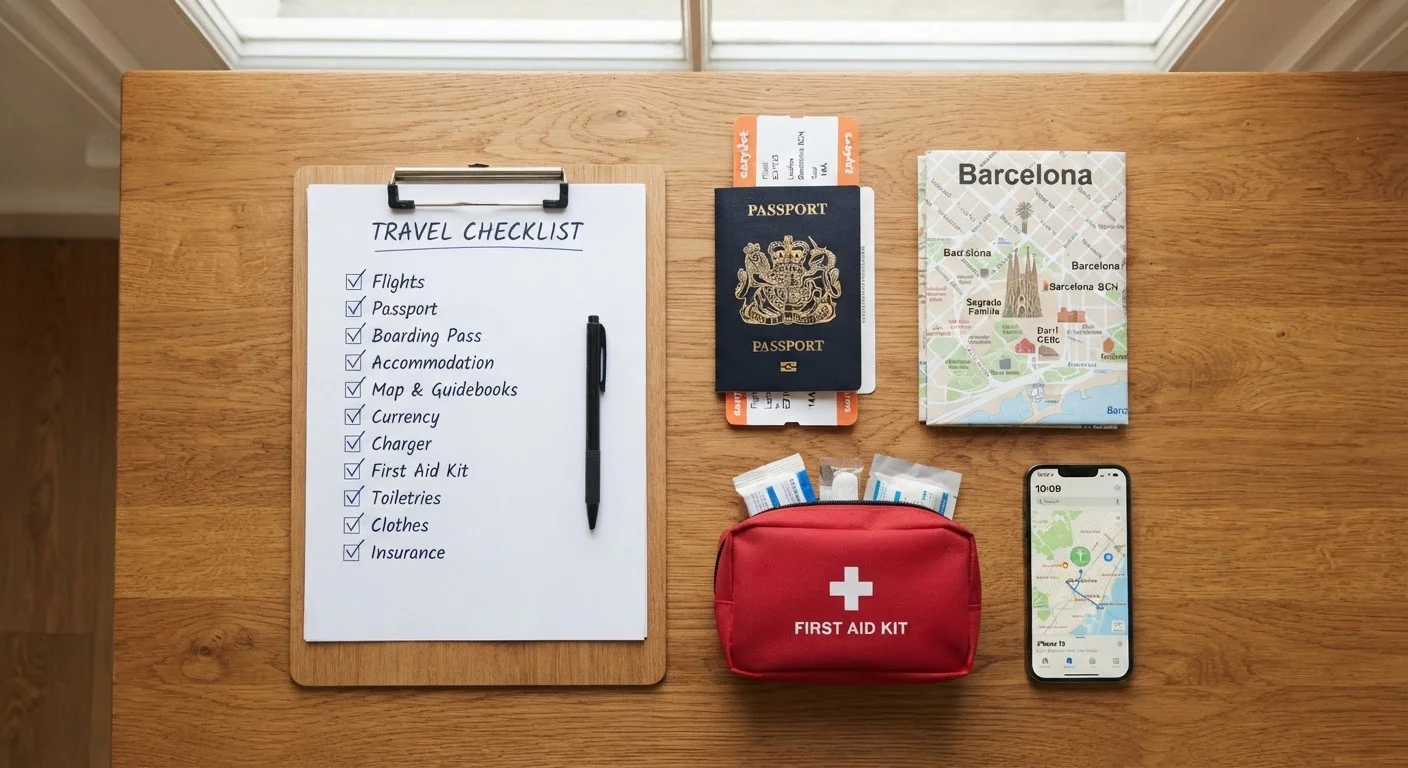
Summary
28 items · 45-90 minutes
Why a Pre-Trip Checklist Matters
Most travel disruptions aren't caused by bad luck - they're caused by overlooked details that could have been handled at home. A forgotten passport renewal, a bank card frozen for suspicious activity, or a prescription left on the counter can derail a trip faster than any flight delay. This checklist is built to close those gaps.
Whether you're taking a weekend road trip or an extended international journey, running through these categories a few days before departure gives you time to fix problems rather than scramble at the airport. For a broader look at how this fits into your overall planning, see The Complete Trip Planning Playbook, which covers everything from destination research through final prep.
Work through the checklist groups below in order - documents first, home security last - so nothing falls through the cracks.
Travel Documents
Finances and Payment
Home Security and Logistics
Health and Medical Preparation
Digital Essentials
Tools and Resources You'll Need
Before you start working through the checklist, gather these resources so you can verify and act on each item without stopping.
Government Travel Advisory Portal (travel.state.gov)
Verify current entry requirements, visa rules, and safety advisories for your destination country.
CDC Traveler's Health Website (wwwnc.cdc.gov/travel)
Look up destination-specific health recommendations, required vaccinations, and health notices.
Cloud Storage Service
Store digital copies of your passport, insurance cards, and booking confirmations for secure offline and online access.
Offline Maps App
Download destination maps for use without internet access while you travel.
Password Manager
Securely store and access login credentials for accounts you may need to access while abroad.
USPS Mail Hold Request (usps.com)
Submit a mail hold request online before departure to prevent mail accumulation at your home.
Once you have these on hand, set aside a dedicated block of time - ideally 48 to 72 hours before departure - to work through each category without rushing. For digital safety specifically, protecting your devices and accounts while traveling is a smart companion read before you pack your tech.
Documents and Entry Requirements
Documents are the highest-stakes category because errors here can prevent you from boarding or entering your destination. Start here, and verify each item against official government sources - entry rules change, and third-party summaries can lag behind.
Verify Entry Requirements With Official Sources
Visa rules, passport validity requirements, and entry conditions change without broad public notice. Always verify current requirements directly through the U.S. Department of State and your destination country's official embassy or consulate website - not through third-party travel blogs. Do this at least several weeks before departure so you have time to address any issues.
For Americans traveling internationally for the first time, Planning Your First International Trip from the US walks through passport, visa, and entry requirements in detail. And don't underestimate passport condition - passport rules travelers often don't know covers the common mistakes that get trips cancelled.
Finances, Home, Health, and Digital Prep
Once your documents are confirmed, work through the remaining four categories. Financial prep prevents your cards from being blocked mid-trip. Home security steps protect your property while you're away. Health preparation covers prescriptions, insurance, and any destination-specific considerations. Digital preparation ensures you have access to what you need offline and that your accounts are protected.
Don't Wait Until the Day Before
Many items on this checklist - passport renewals, visa applications, travel insurance purchases, and vaccination courses - require lead time of days, weeks, or even months. Running this checklist 48 hours before departure may leave you unable to fix problems in time. Aim to complete a first pass at least one to two weeks out. See The Trip Planning Timeline for a month-by-month breakdown of when to handle each task.
For more on staying safe once you arrive, Staying Safe Abroad Without Living in Fear offers practical, realistic habits for managing risk internationally. And if airport security logistics are on your mind, Everything Worth Knowing About Airport Security in the U.S. covers TSA rules, REAL ID, and PreCheck in full.
After completing this checklist, your remaining job is simply to confirm all bookings one final time and get to the airport with appropriate lead time. Travel well.
Entry requirements, visa rules, health recommendations, and travel advisories change frequently. Always verify current information with official government sources - such as the U.S. Department of State and the destination country's embassy - before you travel. This checklist is for general informational purposes and does not substitute for professional medical, legal, or financial advice.
The content on this site is for informational purposes only and is not a substitute for professional advice. Always consult a qualified professional for guidance specific to your situation.