

The Anatomy of a Hair Strand
To understand heat damage, it helps to know what hair is actually made of. Each strand has three layers: the cuticle (the outermost protective scale layer), the cortex (the thick inner layer responsible for strength, elasticity, and color), and the medulla (a soft core not present in all hair types). The cortex is where most heat damage occurs.
The cortex is composed largely of keratin - a fibrous structural protein held together by chemical bonds. Two types of bonds are especially relevant to heat styling: hydrogen bonds, which are relatively weak and reversible, and disulfide bonds, which are strong and permanent. These bonds determine your hair's natural shape and resilience.
Because your hair's porosity and texture affect how its cuticle layers sit and how readily moisture and heat penetrate, they also directly influence how vulnerable your hair is to thermal stress.
What Heat Tools Actually Do to That Structure
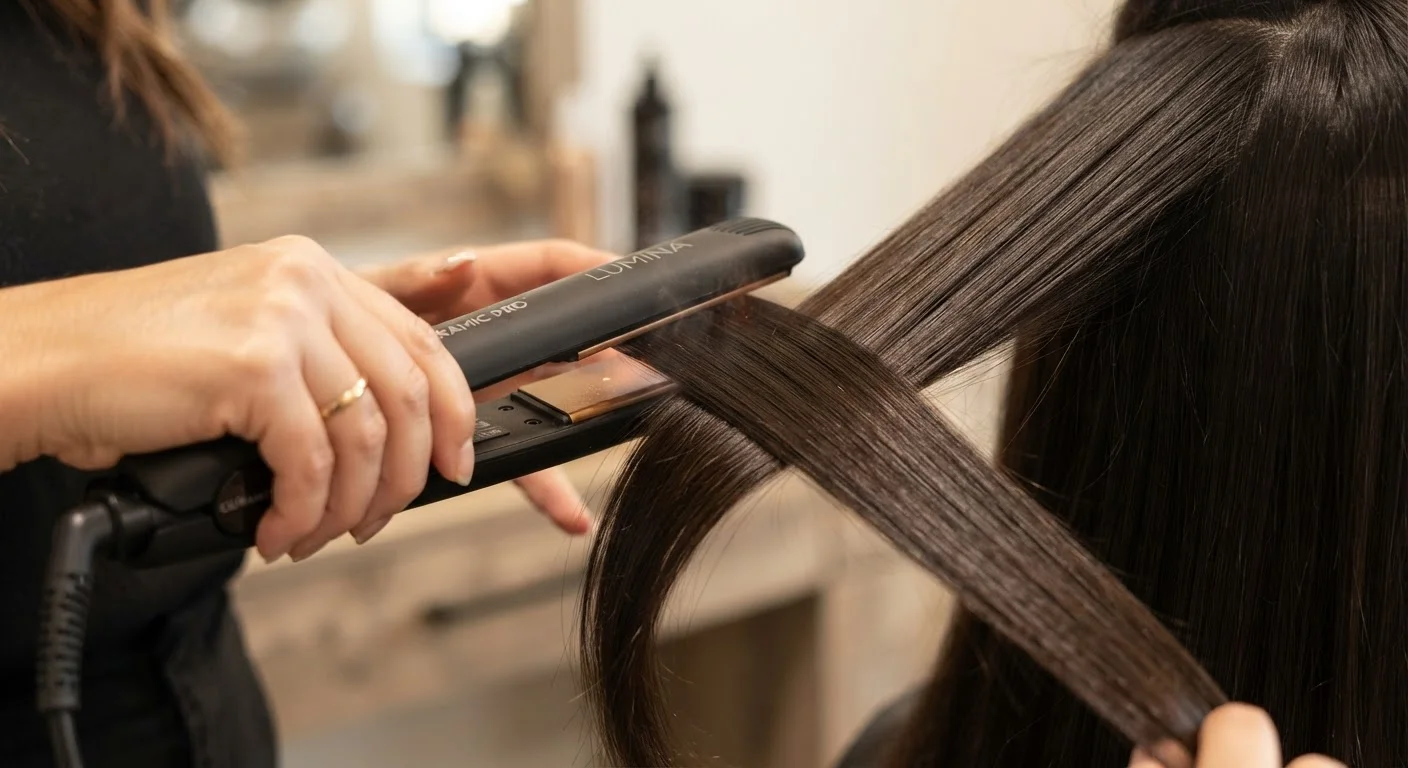
When a flat iron or curling wand makes contact with a hair strand, it rapidly raises the shaft's temperature. At lower heat levels, this temporarily breaks hydrogen bonds - the same mechanism behind setting a curl or stretch in a blowout. Once the hair cools and those bonds reform, the new shape holds. This is the intended, functional outcome of heat styling.
The problem begins when temperatures climb higher or tools linger too long. Above roughly 300-350°F, the hair's water content is driven out aggressively, leaving the shaft brittle and prone to breakage. At higher sustained temperatures, disulfide bonds within the keratin structure begin to break - a change that is not reversible. The cortex becomes permanently weakened, and the cuticle lifts or cracks, losing its ability to protect the inner shaft.
300°F
Temperature threshold for measurable keratin degradation
Studies on thermal hair damage consistently identify this range as where protein structure begins to show stress, with effects worsening as temperatures climb.
~90%
Hair shaft composition that is keratin protein
Because hair is almost entirely protein-based, heat-induced protein breakdown has an outsized effect on its overall strength and elasticity.
2-3×
Greater moisture loss in heat-damaged vs. healthy cuticle
A compromised cuticle layer loses its ability to seal in moisture efficiently, compounding dryness and brittleness with every subsequent styling session.
Visible signs of this progression include a rough or dull surface texture, increased tangling, split ends that travel up the shaft, and a change in how hair holds curl or shape. In severe cases, heat-damaged hair develops a gummy or mushy feel when wet - a sign of significant protein loss.
It's also worth noting that other everyday habits - aggressive towel drying, tight elastics, and skipping trims - compound the cumulative stress that heat tools add.
Risk Factors That Make Damage More Likely
Not all hair responds to heat the same way. Several factors shift the risk profile significantly:
- Hair porosity: High-porosity hair (with raised or damaged cuticles) absorbs heat faster and loses moisture more rapidly under thermal stress.
- Prior chemical processing: Bleached, relaxed, or permed hair already has compromised disulfide bonds, making it considerably more vulnerable. For context, see what chemical straightening does to hair structure.
- Strand diameter: Fine hair has less cortex material to absorb damage before the structure is meaningfully compromised.
- Wet or damp hair: Applying direct heat to wet hair superheats the water inside the shaft, causing it to expand and burst cortex cells - a particularly destructive mechanism.
- Tool temperature and dwell time: Higher temperatures and slower passes both increase exposure and compound damage.
Always Start With Fully Dry Hair
Applying a flat iron or curling wand to damp or wet hair is one of the fastest routes to severe shaft damage. The residual water inside the strand superheats and expands, rupturing the cortex from within. Blow dry completely - or air dry - before using any direct-contact heat tool, regardless of heat protectant use.
Protective styling choices - such as those explored in braids, twists, and other protective styles - offer periods of rest from thermal exposure that allow hair to retain length and health over time.
Minimizing Risk Without Giving Up Heat Styling
Heat damage is cumulative, and prevention is the most effective strategy. A few evidence-informed practices consistently reduce risk:
- Always apply a heat protectant to dry hair before styling. Look for products that form a film barrier and contain ingredients known to slow heat transfer. These products lower thermal stress, especially at moderate temperatures.
- Use the lowest effective temperature for your hair type. Fine or already-processed hair rarely needs temperatures above 300-350°F to achieve results.
- Never heat-style soaking wet hair. Blow dry to fully dry first, then use direct contact tools.
- Limit frequency. Spacing out sessions gives the cuticle time to retain some protective integrity between exposures.
- Keep tools moving. Clamping or wrapping a section and holding it stationary concentrates heat in one spot - increasing localized damage.
No topical treatment can rebuild a fully degraded protein matrix. Deep conditioners and protein treatments support surface feel and reduce further breakage, but they do not restore the structural bonds within the cortex. Managing expectations here is part of informed hair care.
This article is for general informational and educational purposes only and is not a substitute for professional advice from a licensed cosmetologist or dermatologist. Consult a qualified professional for concerns about significant hair loss or scalp conditions.
Frequently Asked Questions
Research suggests that temperatures above approximately 300°F (150°C) begin to cause measurable changes to hair proteins. Fine, chemically treated, or highly porous hair may show damage at even lower temperatures. Many professional tools reach 400°F or higher, well into the range where keratin degradation occurs.
Surface-level dryness can be improved with deep conditioning treatments, but structural protein damage inside the shaft is permanent. The only true solution is cutting off damaged sections and allowing new, healthy hair to grow in. Preventative care is far more effective than any restorative product.
Heat protectants create a barrier that slows heat transfer to the hair shaft and can meaningfully reduce thermal stress, particularly below 400°F. However, they do not create a perfect shield - they lower risk rather than eliminate it. Application technique and product formulation both affect how well they perform.
Generally, yes - blow dryers operate at lower sustained temperatures and involve less direct contact with the hair shaft. However, high-heat settings used close to the hair for extended periods can still cause damage. A diffuser attachment or medium heat setting significantly reduces the risk.
There is no universal safe frequency - it depends on your hair's porosity, texture, current condition, and whether you use a heat protectant. For most hair types, limiting direct heat to once or twice per week and using the lowest effective temperature is a widely recommended starting point.
Yes, significantly. Fine hair has a smaller diameter and less cortex volume, making it more susceptible at lower temperatures. Bleached or chemically processed hair already has compromised protein bonds and takes damage more easily. Coarser, unprocessed hair generally tolerates heat better but is not immune.
The content on this site is for informational purposes only and is not a substitute for professional advice. Always consult a qualified professional for guidance specific to your situation.