

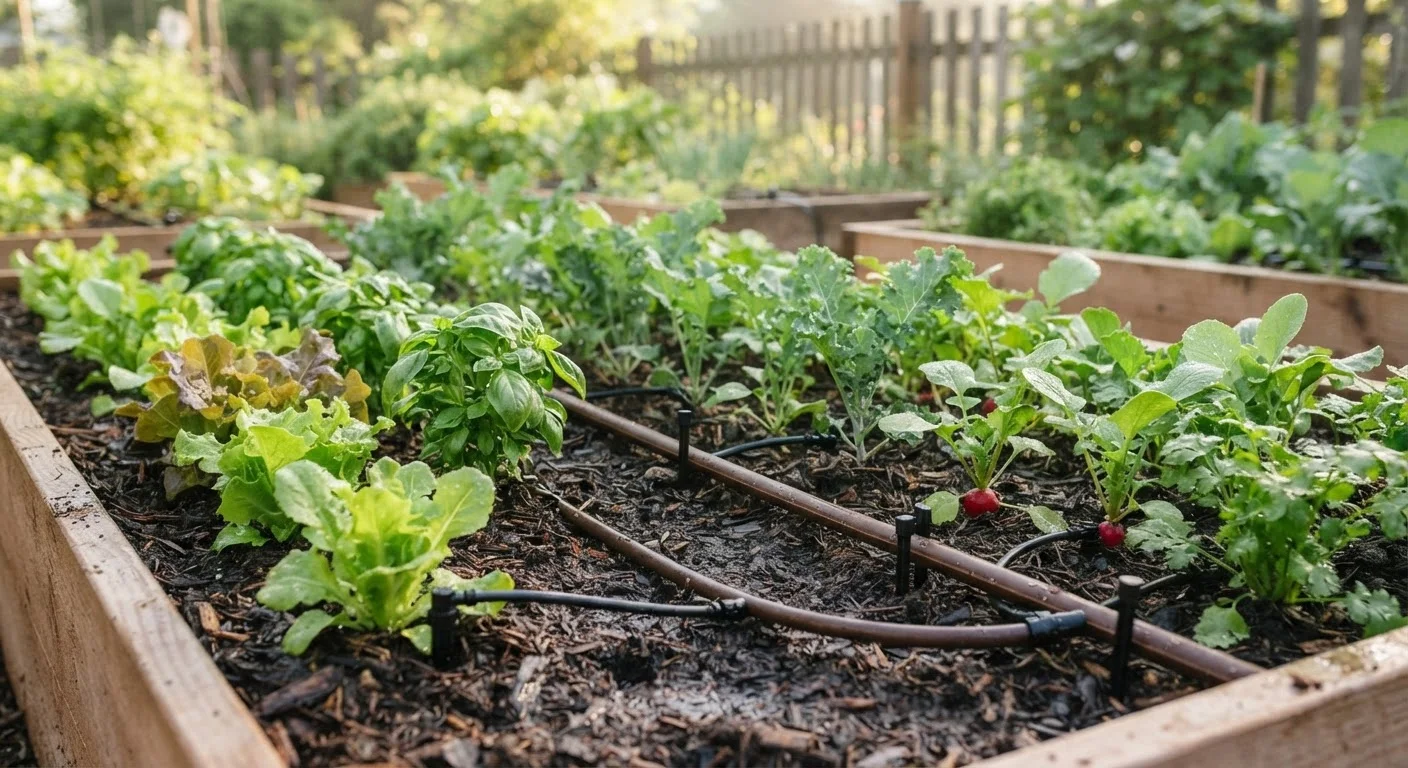
Option A
Drip Irrigation
The precision, low-volume watering solution.
Best for: Best for vegetable beds, raised beds, shrubs, and any planting where targeted root-zone watering matters most.
Option B
Sprinkler Systems
The broad-coverage, set-and-forget watering approach.
Best for: Best for lawns, large open planting areas, and landscapes where uniform surface coverage is the priority.
How Each System Delivers Water
Understanding the mechanics of each system makes it much easier to match one to your garden's needs.
Drip irrigation runs water through a network of flexible tubing and emitters placed at or just below the soil surface. Water drips slowly - typically one to four gallons per hour per emitter - directly onto the root zone. Because water never hits foliage and barely disturbs the soil surface, evaporation rates are low and water penetrates deeply where roots can actually use it. This makes drip systems especially compatible with vegetable gardens and mixed perennial beds. If overwatering is a concern you've run into before, our guide on why overwatering harms plants explains how root-zone precision helps prevent waterlogged conditions.
Sprinkler systems distribute water through rotating or fixed heads that spray in arcs or circles above the ground. They mimic rainfall across a wide surface, which makes them effective for lawns and large uniform areas. However, overhead application means wind can carry water off target, foliage stays wet longer (which can encourage fungal disease), and a meaningful share of each watering cycle evaporates before reaching roots.
| Criterion | Drip Irrigation | Sprinkler Systems |
|---|---|---|
| Water delivery method | Slow drip to root zone | Overhead spray across surface |
| Typical efficiency | 85-90% | 70-75% |
| Best plant types | Vegetables, shrubs, perennials | Lawn grass, large ground covers |
| Foliage wetting | Minimal to none | High |
| Wind impact on water loss | Low | Moderate to high |
| Installation complexity | Moderate (emitter placement) | Low to high (depends on type) |
| Ongoing maintenance | Emitter flushing, line checks | Head adjustments, winterization |
| Timer/automation compatibility | Yes | Yes |
Water Efficiency: What the Numbers Tell Us
Water efficiency is where these two systems diverge most sharply. Drip irrigation is widely recognized by irrigation and landscape professionals as the more efficient delivery method for non-turf plantings. Efficiency ratings for drip systems typically range from 85-90%, meaning the vast majority of applied water reaches the intended root zone. Sprinkler systems often operate at 70-75% efficiency under ideal conditions - and less when wind, heat, or poor scheduling are factors.
85-90%
Typical drip irrigation efficiency rate
Irrigation professionals and extension programs commonly cite drip systems at 85-90% efficiency compared to 70-75% for sprinklers under typical conditions.
~50%
Outdoor water use attributed to landscape irrigation
According to the U.S. Environmental Protection Agency (EPA), roughly 30-50% of residential water use goes to outdoor irrigation, making system efficiency a meaningful factor in household water consumption.
Up to 30%
Potential water savings switching from sprinkler to drip
The EPA's WaterSense program suggests that efficient irrigation practices, including drip systems with smart controls, can reduce outdoor water use by as much as 30% compared to conventional sprinkler watering.
That gap translates to real differences in water use over a growing season. Gardeners who water raised beds or vegetable rows with drip lines generally run their systems for shorter durations because water goes exactly where it's needed. Sprinklers covering the same square footage may need to run longer to compensate for evaporation and overspray. For more on building efficient planting environments, see our piece on raised beds vs. in-ground planting.
Setup Costs and Maintenance Considerations
Neither system is free to install, and setup costs vary widely based on garden size, water pressure, and whether you hire a professional or take the DIY route.
Drip systems generally require more time to plan and install per square foot because emitters must be individually positioned near each plant. Materials - tubing, emitters, pressure regulators, and filters - are widely available and not expensive on their own, but labor adds up in larger gardens. Drip lines can also clog if water contains sediment, so annual flushing and periodic emitter checks are part of routine upkeep.
Sprinkler systems, especially in-ground versions, often involve higher upfront installation costs due to trenching and head placement, though above-ground oscillating or rotary sprinklers are an inexpensive starting point. In-ground systems require winterization in freeze-prone climates to prevent pipe damage, which may mean hiring a professional each fall. Both system types benefit significantly from adding a programmable timer and a rain shutoff sensor - tools that prevent unnecessary watering and reduce water waste regardless of which method you choose. For homeowners thinking about overall outdoor upkeep costs, home maintenance resources can help contextualize irrigation as part of a broader seasonal budget.
Matching Your System to Your Garden
The right system depends less on which one is universally superior and more on what your garden actually contains.
Drip irrigation shines in vegetable beds, herb gardens, fruit shrubs, and perennial borders - any setting where individual plants benefit from targeted watering. It pairs naturally with mulched beds, where the tubing can be tucked underneath to further reduce evaporation. If you're planning a garden that evolves year to year with a mix of plant lifespans, our article on perennials vs. annuals can help you think through how different plant types affect watering needs over time.
Sprinkler systems remain the practical standard for lawn grass and large ground cover areas, where uniform surface moisture is the goal. A traditional turf lawn is difficult to water efficiently with drip. If you're weighing whether lawn grass is the right choice for your yard at all, our balanced look at lawn grass in the American backyard is worth a read before investing in a full sprinkler setup.
Many homeowners find that a hybrid approach - drip for planted beds, sprinklers for turf - gives them the best of both systems. Connecting each zone to a smart timer allows independent scheduling based on actual plant needs rather than a single one-size-fits-all watering cycle.
Don't Overlook Local Water Restrictions
Many U.S. municipalities have seasonal watering schedules or restrictions that affect when and how long you can run any irrigation system. Before installing or programming either system, check with your local water utility or municipality for current guidelines. Some utilities also offer rebates for efficient irrigation equipment - worth asking about when you inquire.
The content on this site is for informational purposes only and is not a substitute for professional advice. Always consult a qualified professional for guidance specific to your situation.