

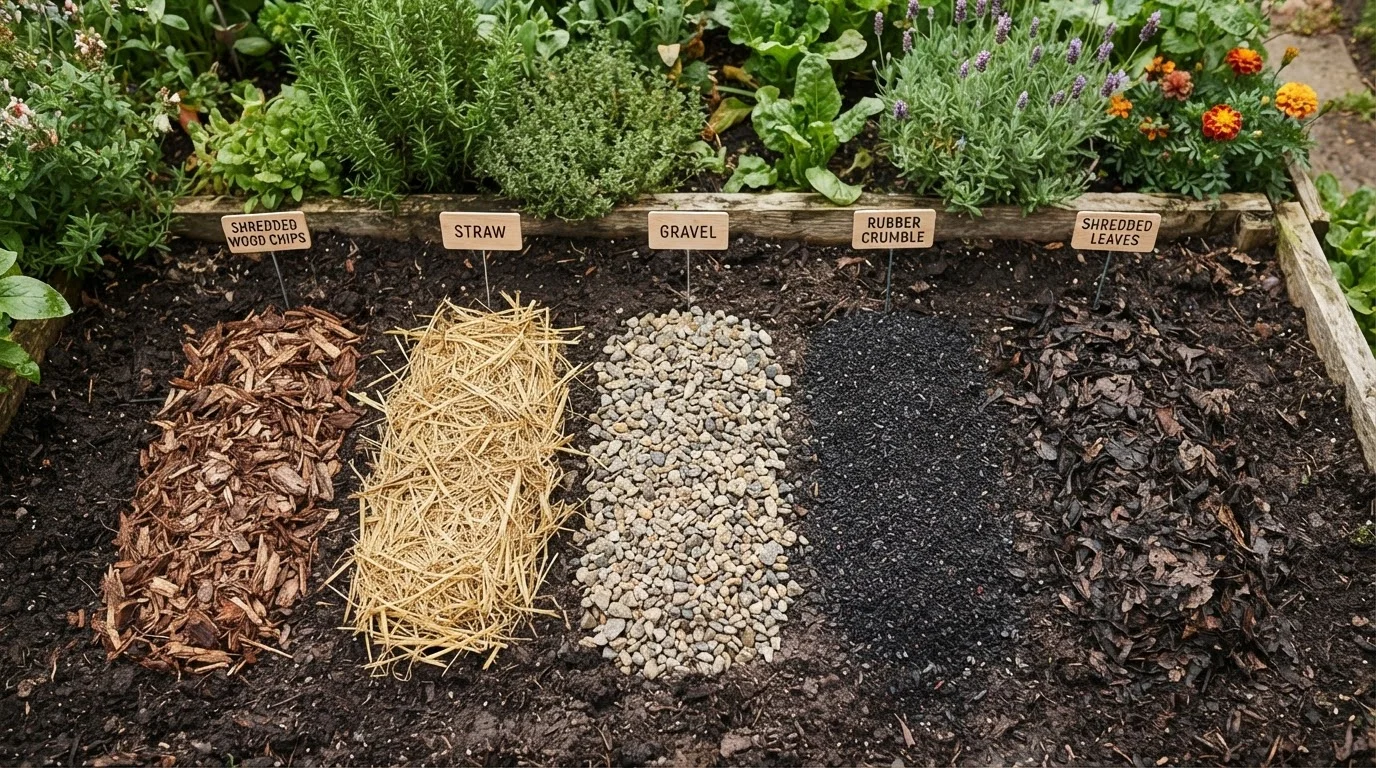
Why Mulch Choice Actually Matters
Mulch does more than make a garden look tidy. It regulates soil temperature, retains moisture, suppresses weeds, and - depending on the material - can actively feed the soil beneath it. But a mulch that works brilliantly in a vegetable bed can cause problems in a rose border, and one that's perfect for a dry xeriscape can waterlog shallow-rooted annuals.
The decision comes down to four factors: the type of plants in the bed, your local climate, whether you want the mulch to break down over time, and how the material affects soil chemistry. Understanding your existing soil composition is a useful starting point before selecting any mulch.
| Ideal mulch depth (most beds) | 2-4 inches (University Cooperative Extension general guidance) |
| Keep mulch away from stems/trunks | At least 2-3 inches clearance (Arborist and extension horticulture recommendations) |
| Straw vs. hay | Use straw - hay contains weed seeds |
| Organic mulch replenishment | Typically once per season or annually |
| Wood chip nitrogen effect | Temporary surface-level only; not harmful to established plants (Washington State University Extension) |
| Rubber mulch suitability | Non-edible ornamental and play areas only |
Organic Mulches: The Decomposers
Organic mulches break down over time, gradually adding organic matter to the soil. This makes them the preferred choice for most planting beds - but each material has its own sweet spot.
Wood Chips and Shredded Bark
Best for: Ornamental shrub beds, perennial borders, pathways between beds, trees.
Depth: 2-4 inches.
Trade-offs: Wood chips from fresh-chipped trees are an excellent free resource (often available from tree services), but avoid placing them directly against plant stems or tree trunks, where trapped moisture encourages rot. As they decompose, they can temporarily draw nitrogen from the top inch of soil - a process called nitrogen immobilization - which rarely affects deep-rooted shrubs but can stress shallow annual roots if chips are tilled in prematurely.
Straw
Best for: Vegetable gardens, strawberry beds, protecting bare soil over winter.
Depth: 3-4 inches.
Trade-offs: Straw (not hay - hay carries weed seeds) insulates well, breaks down within a season, and is easy to move aside for planting. It can harbor slugs in wet climates, so thin it during rainy periods if pest pressure is high.
Shredded Leaves
Best for: Woodland-style beds, around acid-loving shrubs, general purpose.
Depth: 2-3 inches.
Trade-offs: Whole leaves can mat and block water infiltration; shredding first solves this. Shredded leaves break down quickly, so you may need to replenish mid-season. They pair especially well with a home compost layer applied beneath them for a double soil-building benefit.
Grass Clippings
Best for: Vegetable beds as a thin, quick feed.
Depth: 1-2 inches only.
Trade-offs: Applied thickly, clippings form a slimy, anaerobic mat. Thin layers break down fast and release nitrogen. Only use clippings from lawns not treated with broadleaf herbicides.
Nitrogen immobilization
A temporary process where soil microbes consume available nitrogen to break down high-carbon materials like fresh wood chips. It occurs at the soil surface and rarely affects established plant roots growing deeper.
Xeriscape
A landscaping approach designed to minimize water use, often using drought-tolerant plants and inorganic mulches like gravel to reduce irrigation needs.
Landscape fabric
A woven or non-woven synthetic material placed over soil to suppress weeds. It allows some water and air through but can limit soil biology if used long-term over planting beds.
Organic mulch
Any mulch material derived from once-living matter - wood chips, straw, leaves, or grass - that decomposes over time and contributes nutrients and organic matter to the soil.
Inorganic mulch
Mulch made from non-living materials such as gravel, crushed stone, or rubber. It does not decompose or add nutrients but provides long-lasting weed suppression and moisture retention.
Inorganic Mulches: The Suppressors
Inorganic mulches don't decompose, which means zero soil-building benefit - but also zero need to replenish. They excel in low-maintenance and high-heat situations.
Gravel and Crushed Stone
Best for: Xeriscape plantings, Mediterranean herb gardens, rock gardens, paths.
Depth: 1.5-2 inches over landscape fabric or bare soil.
Trade-offs: Stone absorbs heat during the day and releases it at night - helpful in cool climates for heat-loving herbs like thyme and oregano, but damaging to moisture-sensitive plants in hot regions. Once installed, gravel is difficult to remove and can sink into clay soils over time.
Rubber Mulch
Best for: Play areas, non-edible ornamental beds where permanence is the priority.
Depth: 2-3 inches.
Trade-offs: Made from recycled tires, rubber mulch doesn't decompose, doesn't float away, and provides good weed suppression. However, it is not appropriate for vegetable or edible beds due to concerns about leaching compounds into soil over time. It also retains heat at levels that can stress plant roots in summer.
Landscape Fabric
Best for: Under gravel or stone paths, as a weed barrier beneath established shrubs.
Trade-offs: Often oversold as a universal weed stopper. Weed seeds blow onto the fabric surface and germinate in any organic debris that accumulates. Fabric also restricts the biological activity that makes soil healthy. Use it deliberately, not as a default.
Quick Reference: Matching Mulch to Bed Type
Choosing the right mulch becomes straightforward once you know the bed's purpose and plant needs. The table below summarizes key pairings. Keep in mind that whether you're gardening in raised beds or in-ground can also influence how quickly mulch breaks down and how much you need.
| Bed Type | Recommended Mulch | Avoid |
|---|---|---|
| Vegetable garden | Straw, shredded leaves, grass clippings | Rubber, dyed wood chips |
| Perennial border | Shredded bark, wood chips | Thick grass clippings |
| Trees and shrubs | Wood chips (keep away from trunks) | Landscape fabric over roots |
| Herb garden | Gravel, coarse bark | Straw (retains too much moisture) |
| Annual flower bed | Shredded leaves, fine bark | Heavy rubber mulch |
| Rock/xeriscape garden | Gravel, crushed stone | Straw, grass clippings |
When building out a full planting plan, reading your plant tags carefully will reveal moisture and drainage preferences that directly inform which mulch fits best.
Dyed Mulch: A Note on Safety
Brightly colored dyed mulches are common in garden centers. Most use iron oxide or carbon-based dyes considered safe for ornamental use, but they are generally not recommended for vegetable gardens or edible beds as a precaution. The wood source matters too - some dyed products use recycled pallet wood, which may have been treated. For edible gardens, stick with natural, undyed organic mulches.
The content on this site is for informational purposes only and is not a substitute for professional advice. Always consult a qualified professional for guidance specific to your situation.