

Our Verdict
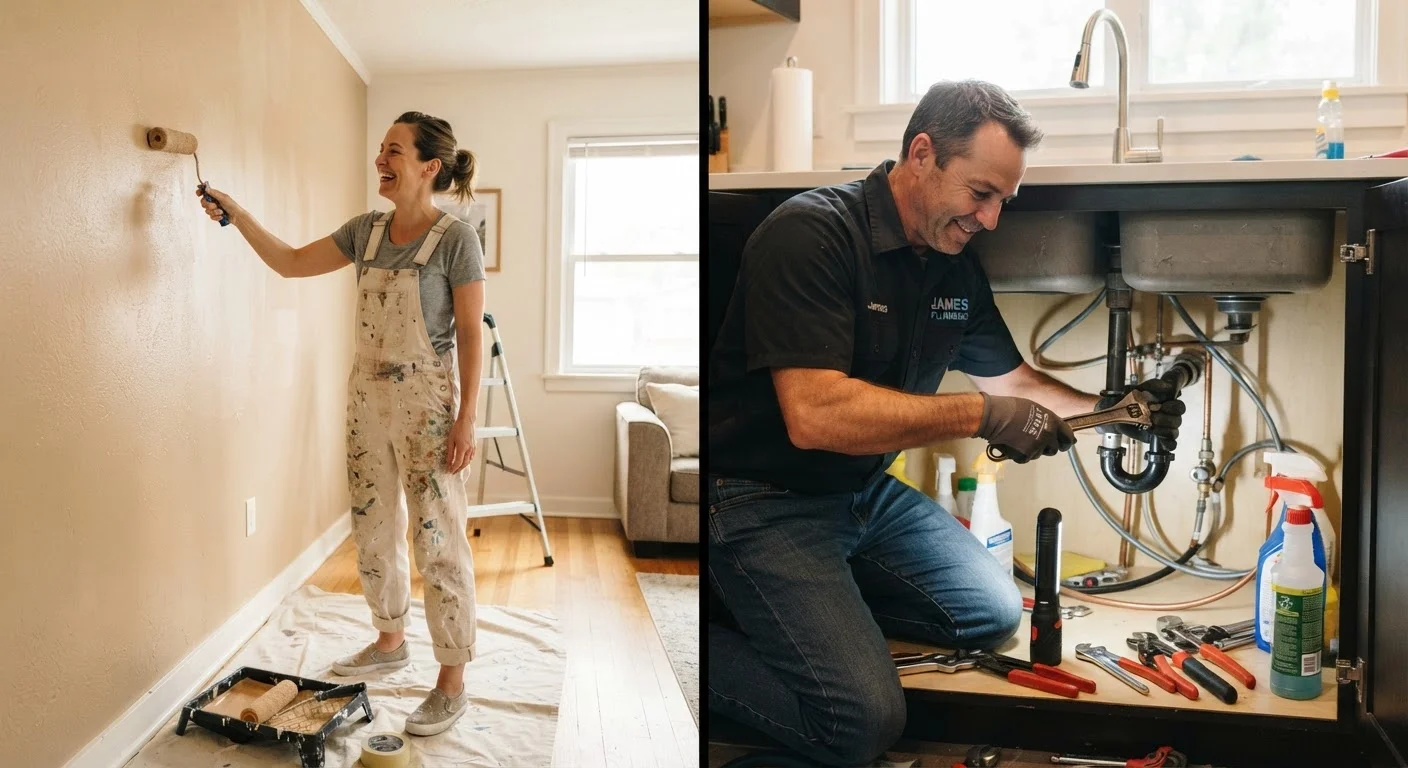
Most homeowners can safely handle cosmetic, low-risk maintenance tasks with basic tools and careful preparation. However, repairs involving electrical systems, gas lines, structural elements, or major plumbing require licensed professionals - both for safety and to meet local code requirements. The smartest approach combines confident DIY on appropriate tasks with timely professional help when the stakes are higher.
| Best for | Recommended |
|---|---|
| Homeowners comfortable with basic tools and low-risk tasks | DIY repairs |
| Repairs involving electrical, gas, structural, or complex plumbing work | Hiring a licensed professional |
| Those unsure of a repair's scope or hidden risks | Professional assessment first |
Why the DIY vs. Pro Decision Matters More Than You Think
The appeal of handling home repairs yourself is understandable: you save on labor, work on your own schedule, and build real knowledge about your home. But the decision isn't just about willingness - it's about safety, code compliance, and whether a well-intentioned fix could mask a larger problem or create liability down the road.
As the renovation myths that cost homeowners real money article makes clear, optimism about project scope is one of the most reliable ways to blow a budget. The goal here isn't to discourage DIY - it's to help you draw the line in the right place.
| Task Type | DIY-Friendly | Hire a Pro | |
|---|---|---|---|
| Interior painting | Yes - with proper prep | Not necessary | |
| Drywall patching (small holes) | Yes - kits available | For large or structural damage | |
| Faucet or fixture replacement | Usually yes | If supply lines or valves are involved | |
| Electrical panel or new circuits | No - permit required | Yes - licensed electrician | |
| Gas line or appliance connection | No - regulated work | Yes - licensed technician | |
| Load-bearing wall modification | No - structural risk | Yes - engineer + contractor | |
| Gutter cleaning and caulking | Yes - routine maintenance | Optional for large homes | |
| HVAC installation or refrigerant | No - EPA regulations | Yes - certified technician |
Repairs That Are Generally Safe to DIY
A broad range of maintenance and cosmetic tasks fall squarely within reach for a careful homeowner with basic tools and a willingness to research the job first. These include:
- Painting interior and exterior surfaces - surface prep matters most; the technique is learnable
- Replacing cabinet hardware, light fixtures (on existing circuits), or bathroom faucets - these involve no structural or high-voltage work
- Patching small drywall holes - kits and tutorials are widely available for holes under about six inches
- Caulking windows, tubs, and doors - a weekend task that meaningfully improves energy efficiency and water resistance
- Replacing weather stripping - inexpensive and high-impact for drafty doors and windows
- Cleaning gutters and downspouts - routine maintenance that prevents water damage when done consistently
These tasks share a key trait: mistakes are correctable without major consequence, and the work doesn't require permits in most jurisdictions. Still, always verify local requirements before starting any project. Tasks homeowners routinely skip often fall into this DIY-friendly category - and skipping them can turn small fixes into larger ones.
Start Small to Build Confidence
If you're new to DIY repairs, begin with low-stakes tasks like caulking, weather stripping, or minor patching before moving to more complex projects. Document what you do with photos - it's useful for future reference and helpful if you later consult a professional about related work. Building a track record of successful small repairs also helps you recognize when a job has grown beyond your comfort level.
When You Need a Licensed Professional
Certain repairs carry risks - to your safety, your home's integrity, or its legal compliance - that make professional help not just advisable but often legally required. These include:
- Electrical panel work, new circuit installation, or rewiring - most states require a licensed electrician and a permit; improper wiring is a leading cause of house fires
- Gas line repairs or appliance connections - gas work is tightly regulated and dangerous when done incorrectly
- Structural changes - removing or modifying walls, especially load-bearing ones, requires engineering knowledge and permits. See what to check before opening a wall for a thorough breakdown of hidden risks
- Roofing repairs beyond minor patching - improper installation can void manufacturer warranties and cause water intrusion that's costly to remediate
- Main plumbing line work or sewer connections - these require permits and, in many areas, licensed plumbers by law
- HVAC installation or refrigerant handling - EPA regulations require certified technicians for refrigerant work
Deferring these repairs to avoid professional costs is a false economy. As explored in the hidden costs of deferred home maintenance, putting off regulated or complex work rarely saves money and often compounds the original problem.
Unpermitted Work Can Cost You Later
Repairs or improvements done without required permits can create serious complications when you sell your home, file an insurance claim, or need follow-up repairs. Many buyers' inspectors flag unpermitted work, and lenders may require it to be brought up to code before closing. Always check with your local building or permitting office before starting work that might require inspection.
The Gray Zone: How to Decide When It's Not Obvious
Many repairs sit in a middle ground - technically possible for a skilled DIYer, but genuinely risky if the scope turns out to be larger than expected. Tiling a bathroom floor, replacing a water heater, or fixing a leaking pipe under a sink all carry variables that can escalate quickly.
A useful framework: ask yourself three questions before starting any uncertain repair.
- If I get this wrong, what's the worst outcome? Cosmetic errors are forgivable. Water damage, fire risk, or structural failure are not.
- Does this work require a permit in my area? Unpermitted work can complicate home sales and insurance claims. Your local building department can answer this quickly.
- Do I have the tools and knowledge to do this safely - not just adequately? YouTube tutorials are helpful, but they can't account for what's inside your specific walls.
When in doubt, a diagnostic call or inspection from a licensed contractor is often inexpensive and can confirm whether DIY is appropriate or worth the risk. For a broader look at how this decision plays out across renovation projects, DIY vs. hiring a contractor offers a practical complement to this guide.
The content on this site is for informational purposes only and is not a substitute for professional advice. Always consult a qualified professional for guidance specific to your situation.